CHESTNUT TREES WILL GO FOR SALE ON aUGUST 28TH, 2023. TREES WILL SHIP THE FOLLOWING SPRING ON A DATE YOU CHOOSE AT CHECKOUT.
The Chestnut trees for sale will produce consistent annual crops of sweet chestnuts dropping from late September until late October. Here at Blue Hill Wildlife Nursery, We have Fall Draw and Woodland chestnut trees for sale. At one time, one out of every four trees in Pennsylvania was an American Chestnut tree. American Chestnut trees provide a substantial food source annually for white-tailed deer and people. However, due to chestnut blight (Diaportha Parasitica), most American Chestnut trees were removed from the surrounding areas by the early 1900s. This left Pennsylvania with a scattered plethora of chestnut trees.
The trees that grow today are not the trees of the past. Today’s trees are surviving the blight, even excelling. I have been gathering and growing chestnut trees from these three localized groups of chestnut trees in Pennsylvania for many years. These three groups, which I have now named Fall Draw and Woodland, have been proving to be excellent food sources annually for my deer. These will produce consistent annual crops of sweet chestnuts from late September until late October. The chestnut trees are very vigorous growing trees relished by the white-tailed deer for their sweet nuts. These nuts are edible for human consumption as well as the deer.
Fall Draw and Woodlands have excellent blight resistance. These are chestnut trees that will survive and feed deer for generations to come. The chestnut trees for sale here are some of the best chestnut trees for deer. To see a video of how the deer population utilizes my chestnut trees, I invite you to click here. click here.
Showing all 3 results
$11.00 – $29.00
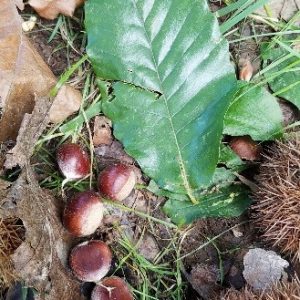
The Fall Draw™ Chinese Chestnut tree produces an abundant crop of sweet chestnuts every year. It is an excellent early producer (you will see chestnuts on your trees between 2-4 years). These trees produce a crop that is highly preferred by whitetail deer and very edible for human consumption. Its attractability mixed with its late drop (through October) make it the perfect hunting tree.
Select options 
$11.00 – $29.00
Blue Hills’s Northern Giant™ Hybrid chestnut is a massive tree that has survived the chestnut blight and Pennsylvania’s hot summers and cold winters in the ruins of an old farmstead. With its 13ft circumference, 70 feet in height, and 60-foot wide crown, it produces enormous loads of sweet nuts every year, dropping in late September and extending well through into late October. The nuts produced from these trees are large and very edible for humans and deer alike. This tree is a complex hybrid of chestnut genes once widely grown in the dominant chestnut growing region of early America – Eastern Pennsylvania. As the massive American chestnut crops produced northeast of Philadelphia succumbed to the chestnut blight, farmers rapidly ramped up production of the European, Japanese, and Chinese chestnut cultivars. And these farms spawned hybrids that still exist today. The Northern Giant™ Hybrid Chestnut has Chinese, Japanese, European, and American genes and has been identified as a Chinese x [(European x Japanese) x American] hybrid. Take advantage of this successful quadruple genetic hybrid and order two or more of them to assure cross pollination. Northern Giant™ is the most vigorous chestnut tree we have ever seen. The original group of trees has experienced -20 degrees, making them suitable for plant hardiness zones 4b-8
Select options 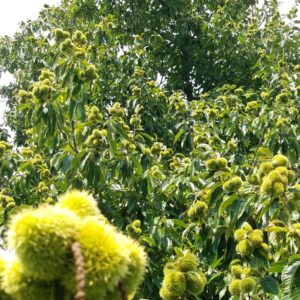
$11.00 – $29.00
These two source trees are isolated most likely pollinating each other. These two trees both reside here in Pennsylvania but would make an excellent tree to plant from here to southern Wisconsin. The Woodland Chestnut trees are both near 80’ tall with a circumference that it would take 3 people hand in hand to go around these trees!
They produce an annual abundance of medium to large, very sweet chestnuts at a very early age ( 3-5 years depending on your soil conditions) which flower well after the chance of frost. Woodland Chestnuts are very fast growing, and will get HUGE! They have excellent blight resistance and are very cold hardy. These trees have been through "ambient temperature" of -22 degrees. The Woodland Chestnut will grow some truly GIANT chestnut trees! Do NOT plant in with fruit trees as they will end up shading out your entire orchard. They are an excellent tree for planting after a timber harvest.
Select options  by
by