Apple Crab tree sales will begin on August 28th, 2023. Trees will ship the following spring on a date you choose as you checkout.
An Applecrab is a hybrid between an apple and a crab apple. This cross is typically well suited for colder climates and makes a much hardier fruit tree—the fruit averages about 2″ inches in diameter. As a result, when combining the two varieties, you get a larger fruit than a crabapple yet produces as heavily as crabapple. Most people would look at an apple crab and think it’s an apple, and there is truth in that thought. The difference is that apple crab can produce a much larger fruit crop than a regular apple tree.
Our trees are unique, specially selected for their particular characteristics. Our Applecrabs are very palatable and sweet-tasting, comparable to or better in taste than most modern apples today. Add in good disease resistance, and you will have trees beneficial for wildlife, especially Whitetail deer. Therefore, when the best of both worlds come together, you get a larger fruit than a crabapple yet produce as heavily as a crabapple. You get a tree that’s exceptional when planting trees for wildlife.
These trees come from scion wood taken from the original tree, essentially giving you a clone of the original tree. The end goal is to provide fruit trees that are dependable food sources and attract wildlife, especially the Whitetail deer.
We all want traits that meet our individual needs. The apple crab provides such needs as consistent and abundant fruit crops, sweet, palatable fruit, and various drop times and lengths. Add in enough built-in disease resistance, and you get a tree that requires less maintenance to be very productive.
Applecrab trees will add diversity to meet your hunting or management needs.
Showing 1–12 of 15 results
$19.95 – $35.95
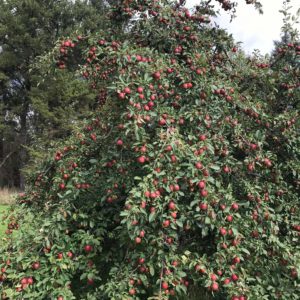
This Grafted apple crab tree is a very heavy spur-producing tree with good disease resistance that shows strong signs of resistance to cedar apple rust, apple scab, powdery mildew, and fireblight in a no-spray situation. The Big Dog Crab will begin dropping in mid-October and will continue into mid-January. The tree is partially self-fertile and produces a large array of blooms in the spring. It is not unusual to see Big Dog put off flowers the 1st year when planting them. Big Dog is very precocious when grafted onto dolgo roots. This tree is very productive, producing abundant crops of 2'' crabapples. This applecrab is late dropping and one very impressive tree, but you can easily see that from the pictures. The vigor in the tree is average, but everything else in this tree is exceptional. Big Dog will reach a mature height of 20'+. Plant Hardiness Zones 3-7. For a video of Big Dog Crab, click here.
Select options 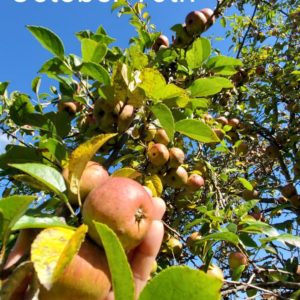
$19.95 – $35.95
Select options
Big Lou™ Crab is easily one of the most unusual and unique trees I have ever encountered. This grafted tree is a heavy annual producer of a 2" apple crab that holds and drops a portion of its fruit during the months of late October, November, December, and January here in Pennsylvania. Big Lou™ Crab drops the most fruit during December and January but will also retain enough fruit that it will continue to drop well into February. For a video from January 17th, 2020, CLICK HERE.
Big Lou™ Crab has a very unusual taste. During the middle of winter, it takes on a nutty yet pear-like flavor. It's easy to see from the pictures and the video of this tree that Big Lou is a Whitetail's favorite treat in very late fall and in through winter. Unlike most other fruit I have ever seen, the fruit holds its integrity, even after being frozen and thawed many times. In the pictures of Big Lou's fruit, you can see that the flesh of this fruit is still firm and intact in the middle of January. If you like to hunt Pennsylvania's late hunting season in January or many other states throughout the Northeast or the Midwest, this tree is necessary. For a video of Big Lou™ on March 1st, 2021, CLICK HERE
The original tree resides in North Western Pennsylvania in plant hardiness zone 5a. Big Lou exhibits no sign of Apple Scab, C.A.R, Powdery Mildew, or Fireblight here in the north. The original tree has seen a sub-zero temperature of -24 that would place its resilience well into plant hardiness zone 4. Plant Hardiness zones 4b - 7. Mature height of 20'+
Only available in 2-yr trees.
$19.95 – $35.95
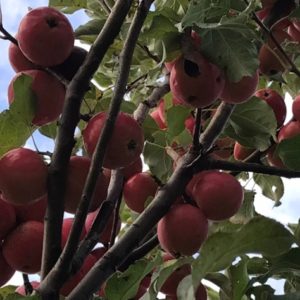
This grafted crabapple is very cold hardy and productive. It produces a very large 2” AppleCrab that tastes very close to a Dolgo crabapple. This crabapple will be dropping free from the tree from October through winter, and will even keep a few apples on into March. The Buckman Crab produced heavily following a winter that had a low of - 41 degrees. This late dropping crabapple as shown good resistance to apple scab, powdery mildew, fireblight and especially cedar apple rust in a no spray situation. Mature height will be 20'+. Plant Hardiness Zones 3-6. For a video of the Buckman Crabapple click here.
Select options Only available in 2-yr trees.
$19.95 – $35.95
Select options
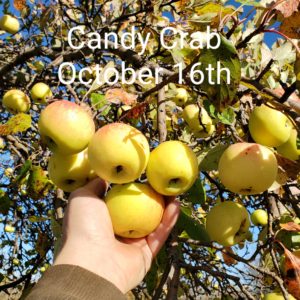
Candy Crab™ is a 2" apple crab or an apple with a complex flavor and finishes with a delightful sweetness. Once you eat one, you will want more of these delicious fruits because of their crisp and exciting flavor. I would describe it as a celebration inside your mouth. I have tasted loads of wild apples and domesticated apples in my travels but never one such as this. The fruit belongs in a grocery store not being planted for deer. It is the best apple I have ever had the pleasure to eat. In my pictures, this crab is heavily loaded every year, yet it still has a nice size to it.
This apple crab is also a product of natural selection by nature that has never been sprayed and is growing wild in North Western Pennsylvania in plant hardiness zone 5a. This tree fully ripens and is a heavy producer. It begins to drop about October 1st and continues to do so well into late November with a constant steady pace here in Pennsylvania.
Candy Crab™ is among a few 1,000 wild crabs growing within the same vicinity yet is exhibiting no signs of C.A.R, Scab, Powdery Mildew, or Fireblight here in the Northeast present in this area. During the polar vortex of 1994, Candy Crab would have experienced temperatures typically seen in plant hardiness zone 4a. Yet, it is still standing here today, making this crab very suitable for zone 4b and maybe even below.
The name Candy Crab™ fits this new cultivar perfectly, and I see it being sold well beyond the use for wildlife. If you like to eat apples, you would be crazy not to have a Candy Crab™ planted behind the house or on the way to your stand. Mature height will be 20+. Plant Hardiness zones 4b -7.
$19.95 – $35.95
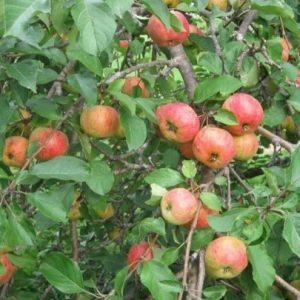
This grafted Chestnut crabapple tree produces a 2’’ apple that is very good for fresh eating, ripens in early September, with a few apples persisting on the tree into October. This tree is a favorite for eating out of hand to many that have planted it. Chestnut crabapple trees have excellent disease resistance to common apple tree diseases. In a no spray situation I have seen great resistance to apple scab, cedar apple rust, powdery mildew and fireblight. This tree is annually productive with heavy crops and is very cold hardy down to Zone 3. Chestnut Crab will reach a mature height of 20'+. Plant Hardiness zones 3 - 8.
Select options 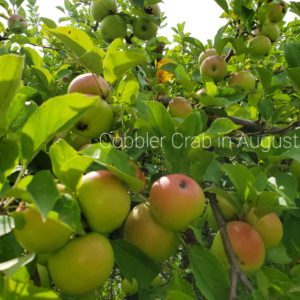
$19.95 – $35.95
Cobbler Crab™ is a new cultivar. This grafted tree produces an applecrab over 2'' in diameter, annually and heavily. The fruit is crisp, sweet with a touch of tartness which will mellow after time in storage or on the ground. Cobbler Crab™ keeps very well and may belong in your personal orchard as much as it does in your wildlife orchard. The vigor of Cobbler Crab™ is exceptional! The tree grows very fast when grafted onto Dolgo roots.
The fruit begins dropping in early October continuing into December and in some years has been found to still be holding and dropping 20% into January. While being surrounded by 1,000's of other wild apple trees, Cobbler Crab™ has shown resistance to Apple Scab, C.A.R, Fireblight and Powdery Mildew while other apple trees in the area are showing or have shown signs of these diseases here in the northeast. The tree originates from North Western Pennsylvania in hardiness zone 5a but has experienced winter lows of -24 in its life equivalent to those experienced in plant hardiness zone 4. Making this tree suitable for plant hardiness zones 4b - 7.
Maturity height 20'+.
Only available in 2-yr trees.
Select options 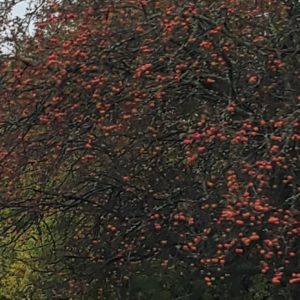
$19.95 – $35.95
Select options
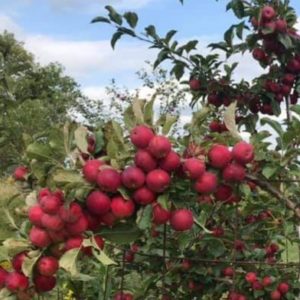
Ed's Crazy Crab™ is a grafted apple crab that earns its name because, as shown in this picture, it pounds out the fruit! I have known this tree for three or four years, and I have yet to see it fail to set a heaving amount of fruit. Ed's crazy Crab™ is prolific and sets fruit annually that falls all fall long. The tree is red-leaved and red-fleshed, producing a golfball-sized fruit dropping from October into the new year. Ed's Crazy Crab™ has shown disease resistance across all major apple tree diseases in a no-spray situation. I have seen a small amount of cedar-apple rust, yet nothing to get excited about. The original tree stands about 35' tall and resides in plant hardiness zone 4b. This tree begins dropping its apple crab in October, peaks during my favorite time during November, and retains some fruits dropping throughout December. The original tree resides in plant hardiness zone 4b, making it very hardy from zones 4-7. You will have a mature height of 20'+
$19.95 – $35.95
This Grafted Kerr crabapple was introduced in 1952, a cross between the Dolgo and Harlson crab apples. This tree produces heavy crops of apples annually, making it one of the best crabapple trees for deer. Kerr crabapple is around 2" in size with a slightly tart but sweet taste that's good for fresh eating or cider and, more importantly, for me feeding deer—Hardy down to Zone 3, with excellent disease resistance to common apple tree diseases. In a no-spray situation, I see excellent resistance to cedar apple rust, good resistance to apple scab, powdery mildew, and fireblight. This tree will begin dropping in October and continue to drop all fall, with a few persisting on the tree into winter. Kerr is one of the best crabapple tree options for deer sold commercially today. It starts dropping for me in central Pennsylvania in late October and continues into early December. I wouldn't be without this tree. It is clean, hugely productive, and falling at the perfect time, as seen in the pictures. This tree will reach a mature height of 20'+. Plant Hardiness Zones 3-8.
Only available in 2-yr trees.
Select options 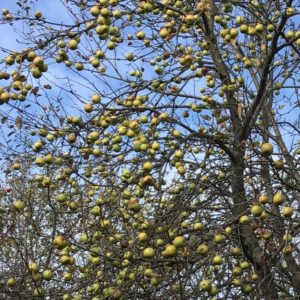
$19.95 – $35.95
Select options
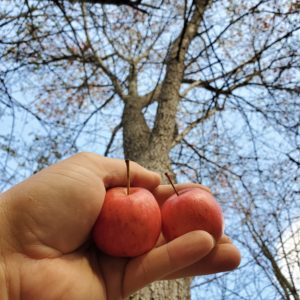
Lockdown Crab™ is an apple crab and is a new cultivar to the Wildlife Management World. Actually, a new apple to the World and is a product of natural selection.
This grafted apple produces heavy crops of 2”+ fruit and drops most of its fruit during November and a few continuing into December. When planted in an area where it blooms from early to mid-May in the north, Lockdown Crab™ will ripen and begin to drop in late October, with the main drop during that important mid-November period. If you are planting below the 40th parallel north, I'm sure you will see this drop time shift and become a few weeks earlier as you go south of this location. Lockdown produces fruit annually and does its job well. I've known this tree for three fruiting seasons, and it has not failed to fruit in those three years.
This sweet apple is heavy bearing and an annual producer. It also shows resistance to C.A.R., Apple Scab, Powdery Mildew, and Fireblight in the Northeast.
Lockdown Crab™ has readily tolerated temperatures of -35 degrees, making it well suited for Northern Climates. With all of its great qualities, Lockdown Crab ™ would be a beneficial component when looking for an enticing food source for wildlife north of the 40th latitude at a time during that critical lockdown period. Lockdown Crab ™ will have a mature height of 20’+. Plant Hardiness Zone 4-7.
$19.95 – $35.95
Select options
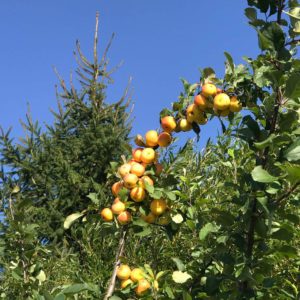
Peak Attraction™ is a grafted apple crab with many exceptional characteristics that make this tree an exception cultivar for wildlife. These characteristics include a high resistance or immunity to apple scab, cedar apple rust, powdery mildew, and fireblight in a no-spray situation. Peak attraction™ is an annually productive tree, producing 2'' apple crabs that I would describe as a sweet nutty-flavored apple. This tree begins dropping in mid-October, continuing through November. It retains a few 100 fruits into December and January. Still, during November, the main drop occurs for a large portion of the U.S. When the peak of deer movement during the rut matches fruit falling, it creates something extraordinary. The apple crabs falling during this time is why this tree has earned the name peak attraction™. This tree exhibits a high level of vigor when grafted onto Dolgo roots, and productivity almost to be unmatched. As we look at these pictures of Peak Attraction™, the original tree is a giant and well over 50' tall from the excessive vigor that this tree has. The original tree resides in plant hardiness zone 4b, making it very hardy from zones 4b-8. You will have a mature height of 20'+
$19.95 – $35.95
Select options
This grafted tree is extremely cold hardy, originating from plant hardiness zone 4a.
Sweet Dog is a 2" applecrab with a complex yet sweet flavor. This tree has fruited heavily after receiving -41 degree temperatures and has proven itself to be a consistently heavy and annual producer. Sweet Dog ripens and drops around the same time period as the Chestnut Crab, dropping fruit mainly during the month of September with a few lasting into October. This grafted tree is a great tree to add to your management plan or combine it with Chestnut Crab adding two cold hardy trees that would give you diversity in your plantings program. This applecrab is also a great addition into a cider mix.
Sweet Dog is showing some great resistance with no Apple Scab, Cedar Apple Rust, Fireblight or Powdery Mildew on this tree in a no spray situation. Mature height is 20'+ and suitable for plant hardiness zones 3-7.
Only available in 2-yr trees.
$19.95 – $35.95
Select options
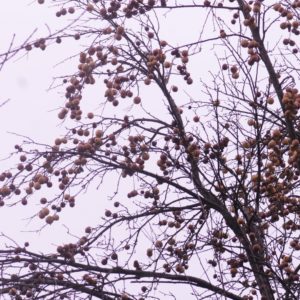
Sweet November Crab™ is a grafted tree which bears a 2" sweet tasting applecrab. The parent tree originates from Northern New York in plant hardiness zone 4 and has seen temperatures as low as -35 degrees. It’s easy to see by its pictures (pictures are from 12/1 and 50% has dropped) that this tree produces a very heavy crop of exceptionally nice sized crabs in Northern New York that drop from early November into January. I believe that once this cultivar is grafted and growing above and below the 40th degree latitude (northern and southern states) we all will see a very nice November/December drop.
As the month of November arrives, most varieties of fruit trees sold commercially will be vacant of fruit. Having varieties such as Sweet November (along with many of our other late dropping cultivars) can create something special as illustrated from just a few pictures shared from among thousands of trail camera photos. While having fruit hitting the ground during late season such as Sweet November you will attract and hold enough does that bucks will definitely be cruising these specific trees looking for receptive does.
Sweet November crab™ is presently growing in the vicinity of 1,000's of other wild apple trees and is showing good resistance to Apple Scab, C.A.R, Powdery Mildew and Fireblight here in the Northeast. The leaves and fruit are very clean in this very big huge old tree with weeping limbs from all the years of carrying a heavy fruit load. Plant Hardiness zones 4 - 7.
Mature height 20'+
 by
by