Product Description
$19.95 – $35.95
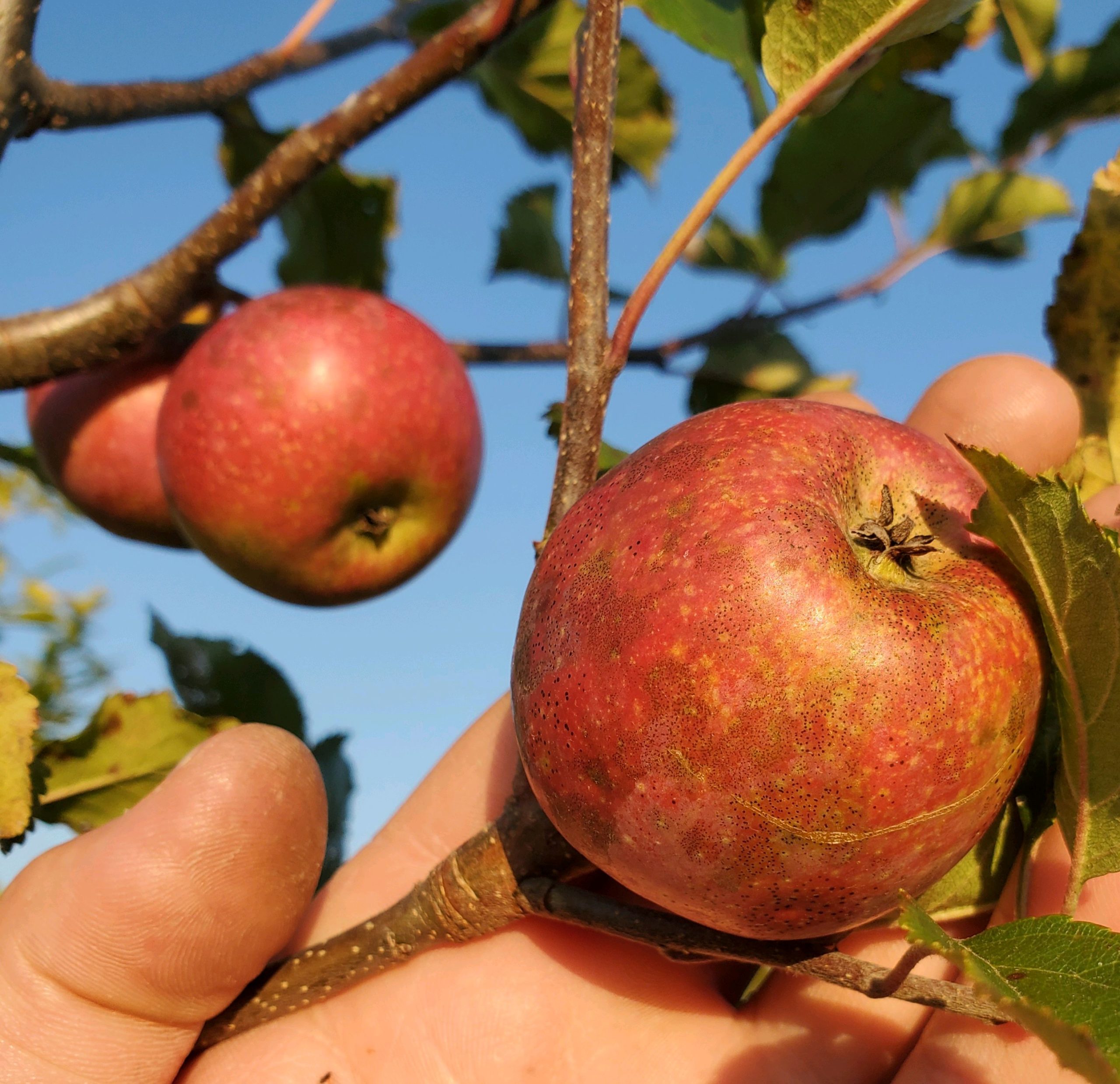
Yates apple is a heavy annually productive grafted apple tree, really yates is an applecrab. With its “Southern Roots”, many people would think that the Yates apple isn’t a good Northern apple. Yet, this tree is thriving well in temperatures down to -25 degrees, making this a solid apple tree into zone 4b. Yates apple tree is a heavy annual producer with a great tasting 2” applecrab and is very resistant to common apple tree diseases. Insects do not bother this tree as much as some other apple trees. In a no spray situation yates has excellent resistance to apple scab, fireblight, powdery mildew and good resistance to cedar apple rust. This tree has a great drop time of October, November, and well into December depending on how far north you are planting. In the south, yates will drop October into mid November. The farther you move this tree north the later it hangs. Here in Pennsylvania this tree is dropping in November and continues well into December. The trees as dependable as they come, the picture your looking at is of yates producing after a mid-May 26° freeze. Yates Apple tree will reach a mature height of 20’+. Plant Hardiness zones 4-8
Description
YATES APPLE
Yates apple is a heavy annually productive grafted apple tree, really yates is an applecrab. With its “Southern Roots”, many people would think that the Yates apple isn’t a good Northern apple. Yet, this tree is thriving well in temperatures down to -25 degrees, making this a solid apple tree into zone 4.
Yates apple tree is a heavy annual producer with a great tasting 2” applecrab and is very resistant to common apple tree diseases. In a no spray situation yates has excellent resistance to apple scab, fireblight, powdery mildew and good resistance to cedar apple rust. This tree has a great drop time of October, November, and well into December depending on how far north you are planting. The farther you move this tree north the later it hangs. Yates Apple tree will reach a mature height of 20’+. Plant Hardiness zones 4-8
The yates apple is made by using plant tissue from the original tree and attaching it to the new roots. This essentially is giving you an identical tree, of the one you see in the picture and description.
TREE SIZE FOR YATES APPLE
2-3′ ( 3/8” dia.) These trees will have a good root system. They will be whips around 3′ high with a trunk diameter of 3/8”.
3-5′ ( 1/2” dia.) These trees will have a good root system with some possible branching but will mainly be whips. They will range in height between 3′ to 5′ with a trunk diameter of around a 1/2”.
4-6′ (+ 1/2” dia.) These trees will have an extensive root system and typically having multiple branches but many will be solid whips. They will range in height between 4′ and 6′ with a trunk diameter of 1/2” to 3/4”.
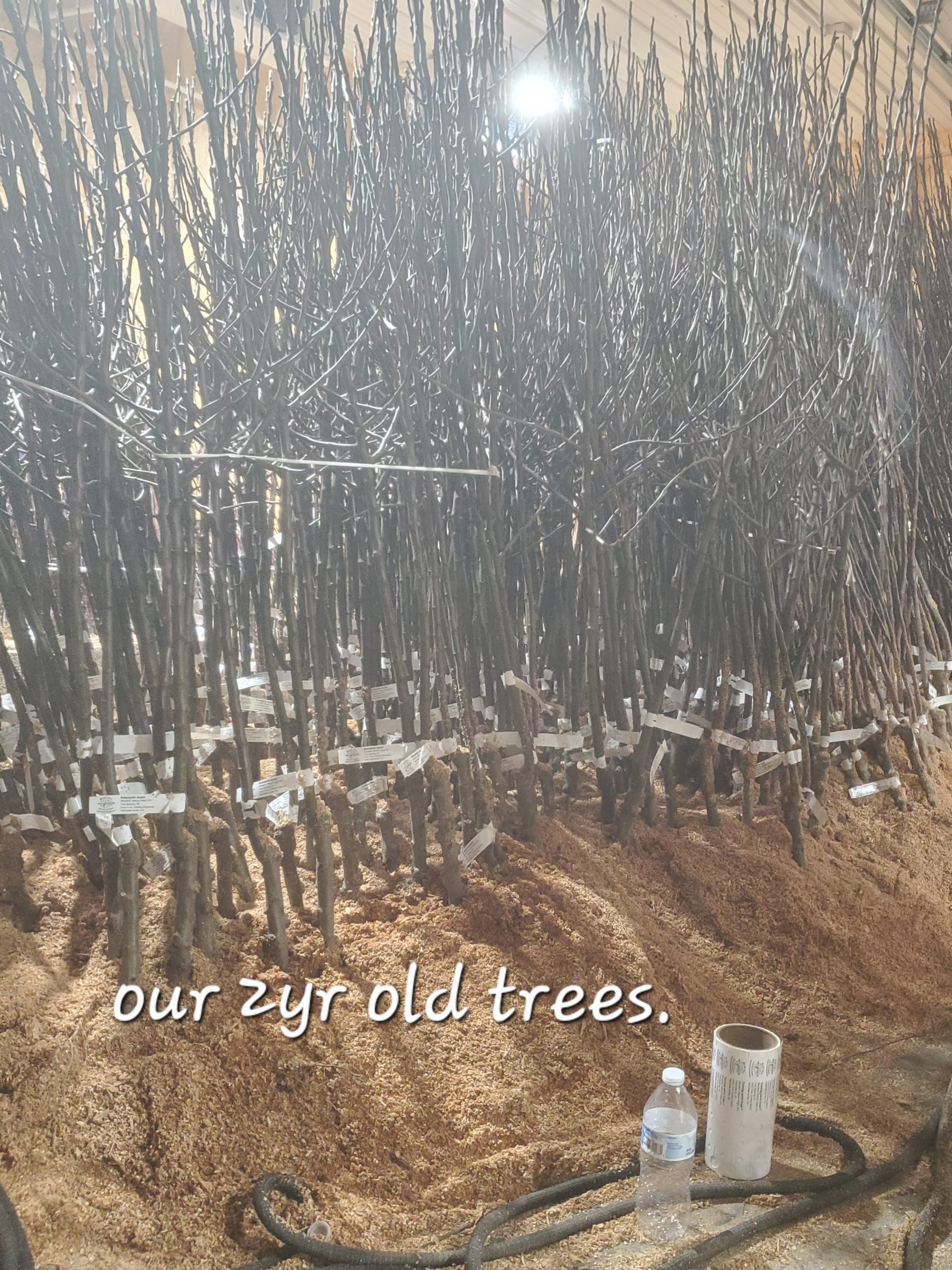
2-yr 4-6′ (5/8”-3/4” dia.) These two-year-old trees will have an extensive root system and can have multiple branches with a diameter of 5/8” and greater. We will be pruning the trees back to a shipping height of 66” with the roots. Our largest box is 66″x 14″x 15″ and will hold 15 of the 2-yr trees. Free local pick-up is open to the surrounding states of Pennsylvania.
STANDARD ROOTSTOCK
Yates Apple is grafted to a standard root that is extremely cold, hardy, and vigorous. This Rootstock is an excellent choice for wildlife trees because it produces a full-size 20’ to 30’ tree. Producing a full-size tree for wildlife means much more fruit on a given tree. This rootstock will develop deep ”Real roots” making it exceptionally well anchored, penetrating well into the subsoil, pulling up lost nutrients, and making it very drought tolerant. This root is a great all-around rootstock for wildlife plantings.
This standard-size rootstock is adaptable to many soil types and conditions, especially when planted in less desirable locations. Therefore, with its full vigor, can be used in areas that were once wooded and are now food plots, reclaimed land, shale mountain soil, dryer uplands, and ridges. This standard rootstock will also perform well in improved soil in an orchard-style setting. We are only grafting onto the most vigorous roots in a given year. When grafting onto the top 30% of seedlings, you get a rootstock about 40% more vigorous tree than many clonal stocks used for wildlife trees today. Yates Apple is very precocious, with many trees producing very quickly anon this standard root making it an all-around excellent rootstock for wildlife plantings.
PLANTING INSTRUCTIONS FOR YATES APPLE
Plant at least one different apple or crabapple variety within close proximity to Yates Apple tree for pollination. Grams Gift crabapple, Centennial crabapple GoldRush or Enterprise apple will make excellent pollinator for Yates Apple. Plant your Yates apple tree in moist, well drained soil with a soil pH between 5.8 – 7 with adequate nutrient levels for optimal growth.
If you have not completed a soil test click here and improved your soil I would highly recommend doing so. However, if you are not going to I would recommend mixing 1 ounce for every 3 sq ft of 0-20-20 granular fertilizer in your soil at the time of planting. The first number tells you percentage of nitrogen contained in the fertilizer. Nitrogen applied directly to the roots of the tree will cause death to your tree, make sure the first number is zero.
Nitrogen is very mobile in the soil and You can apply a small amount of Nitrogen the following year as needed. The 2nd and 3rd numbers are Phosphorus and Potassium. Apply these two nutrients at or well before the time of planting, because they are basically immobile in the soil, they will need mixed in through the soil. We recommend completing a soil test and making amendments for best results.
Yates Apple requires a minimum of 6 hours of sunlight for growth and fruit production. Space trees 20′ apart and use cages of at least 5’ to protect your trees. This will ensure your deer eat your fruit in a few years and not your trees this year.
SHIPPING/PICK UP
Shipping to Plant Hardiness zones 2 – 8 will begin again in mid-March on Mondays, Tuesdays, and Wednesdays (you select your ship date) and continue until the last Monday in April. Dormant bare-root trees must be planted in the spring, while trees in your area remain dormant. You can select your ship date as you checkout on the website. If you are picking up your trees, typically, the last week in March or the first week in April is perfect for planting in Pennsylvania. We have opened up the free local pick-up to the surrounding states as it could be more cost-effective if you order more than 30 trees. You can select your pick-up date on the website as you checkout. Please call or message us to make an appointment to pick up your trees if you can not make the date you selected.
For More Information Visit:
Additional information
| Weight | 18 oz |
|---|---|
| Dimensions | 58 × 2.30 × 2.30 in |
| Tree Size | 2-3' (3/8'' dia.), 3-5' (1/2'' dia.), 4-6' (+1/2'' dia.), 2-yr old 4-6' (+5/8''dia.) |
Only logged in customers who have purchased this product may leave a review.
Returns: We have been shipping plants around the country for quite some time now. We provide
healthy live plants. We take every effort to ensure that your plants are packed in a way that
maintains that health as they arrive to you. We can not be responsible for how plants are handled
when they leave our care or are handled by customers.
Tree care: If you plant your tree up on high dry ground they may need watered through the first
summer, if you plant too low and wet your trees may drown. Be careful of the herbicide you may
use around the tree (read the label). I want you and your trees to succeed but if you don't tube or
cage them the deer will eat your tree that night.
Hours: We do not keep regular hours. If you would like to visit the nursery, just call, send a
message or email. Anyone is more than welcome.
Selected pickup dates: Trees can be picked up in the spring as soon as you can dig in your soil.
Trees need to be picked by the end of April. Before picking up, please contact us letting us know
when you are planning to come so we can have your order ready for you when you arrive.
Shipping: When buying grafted trees, depending on the amount of trees you order will determine
the size box the trees will be shipped in. If you order 4 two year old trees, they will fit into a 66in
x 8in x 8in box. Ordering 5-15 two year old trees will fill into a 66in x 15in x 14in box. Ordering
16 or more two year old trees will fill into 2 or more boxes, depending on the total amount of
trees bought. Trees may need to be professionally pruned to fit in these boxes. Ship dates will be
selected by you before completing you order. We ship trees from early March to late April. You
should select a ship date that is suitable for the location you are planting your trees. Trees will
ship through UPS on Monday’s, Tuesday’s, and Wednesday’s. You will receive an email
notification when your trees ship. When trees arrive, plant as soon as possible. If you cannot, it
would be best to heal them into soil or store in a cool place not allowing roots to freeze but not
allowing the trees to become warm.
If Tree Tube products are the only items you purchase then they will ship as soon as the order is
received. You may have to select a ship date but I can assure you if you are just ordering tree
tubes they will ship immediately. If Tree Tube products are purchased with trees, then they will
ship with the trees.
Due to the cost of shipping there will be a minimum of 4 trees that have to be purchased in order
for checkout to occur. Due to phytosanitary regulations, we do not ship to California. We also do not ship chestnut trees to Washington, Florida or Oregon State. Trees will be packaged correctly to meet the shipping requirements for Idaho and all other states.
Related Products
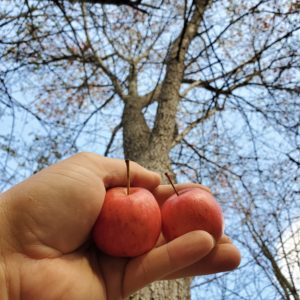
Peak Attraction™ is a grafted apple crab with many exceptional characteristics that make this tree an exception cultivar for wildlife. These characteristics include a high resistance or immunity to apple scab, cedar apple rust, powdery mildew, and fireblight in a no-spray situation. Peak attraction™ is an annually productive tree, producing 2'' apple crabs that I would describe as a sweet nutty-flavored apple. This tree begins dropping in mid-October, continuing through November. It retains a few 100 fruits into December and January. Still, during November, the main drop occurs for a large portion of the U.S. When the peak of deer movement during the rut matches fruit falling, it creates something extraordinary. The apple crabs falling during this time is why this tree has earned the name peak attraction™. This tree exhibits a high level of vigor when grafted onto Dolgo roots, and productivity almost to be unmatched. As we look at these pictures of Peak Attraction™, the original tree is a giant and well over 50' tall from the excessive vigor that this tree has. The original tree resides in plant hardiness zone 4b, making it very hardy from zones 4b-8. You will have a mature height of 20'+
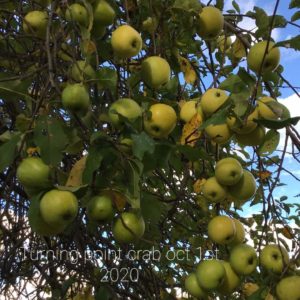
Some trees can produce fruit each year as sure as the sun comes up tomorrow, and Turning Point™ is just one of those trees. This grafted apple crab produces heavy crops of giant crabs to 2"+ sweet apples annually that hold well to the tree and drop from Mid-October well on through winter. A good portion of this fruit will fall during Late October and into November for most of the country's northern half. If you're like me, you want your property to peak in November. I like that the Turning Point™ tree ripens unevenly and gives me a substantial drop during a pivotal point in buck movement in November here in the NorthEast. Turning point™ apple is a Late-season apple by the sheer fact that it produces so much that the drop continues well into winter. This apple tree shows strong resistance to C.A.R, Apple Scab, powdery mildew, and fireblight here in the Northeast.
Turning Point™ is a tree that does not ripen at the same time. A huge bonus! This tree will have deer looking for its sweet-tasting fruit in October as apples start falling. That dependable attraction will continue well into the winter months. Turning point™ is a tree that has already proven fantastic here in the north. I believe that this tree will prove itself to possibly be one of the best late-season apple trees to hit the south that has ever come along. I could write on and on about this tree, but it's easier for me to show you a video. Click Here to see the video.
Turning Point™ has readily seen temperatures of -35 degrees, making it well suited for Northern Climates With all of its great qualities, Turning Point™ is an essential Mid and late-season apple tree for providing a substantial food source for all wildlife, especially deer, even into the winter months Turning point™ apple will have a mature height of 20'+ Suitable for plant hardiness zones 4-7
Only available in 2-yr trees.
$34.95 – $35.95
Select options 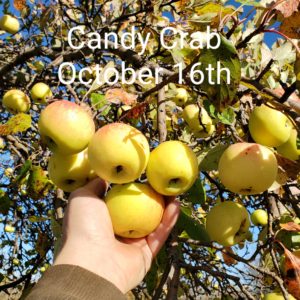
Candy Crab™ is a 2" apple crab or an apple with a complex flavor and finishes with a delightful sweetness. Once you eat one, you will want more of these delicious fruits because of their crisp and exciting flavor. I would describe it as a celebration inside your mouth. I have tasted loads of wild apples and domesticated apples in my travels but never one such as this. The fruit belongs in a grocery store not being planted for deer. It is the best apple I have ever had the pleasure to eat. In my pictures, this crab is heavily loaded every year, yet it still has a nice size to it.
This apple crab is also a product of natural selection by nature that has never been sprayed and is growing wild in North Western Pennsylvania in plant hardiness zone 5a. This tree fully ripens and is a heavy producer. It begins to drop about October 1st and continues to do so well into late November with a constant steady pace here in Pennsylvania.
Candy Crab™ is among a few 1,000 wild crabs growing within the same vicinity yet is exhibiting no signs of C.A.R, Scab, Powdery Mildew, or Fireblight here in the Northeast present in this area. During the polar vortex of 1994, Candy Crab would have experienced temperatures typically seen in plant hardiness zone 4a. Yet, it is still standing here today, making this crab very suitable for zone 4b and maybe even below.
The name Candy Crab™ fits this new cultivar perfectly, and I see it being sold well beyond the use for wildlife. If you like to eat apples, you would be crazy not to have a Candy Crab™ planted behind the house or on the way to your stand. Mature height will be 20+. Plant Hardiness zones 4b -7.
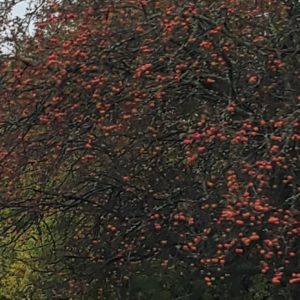
Ed's Crazy Crab™ is a grafted apple crab that earns its name because, as shown in this picture, it pounds out the fruit! I have known this tree for three or four years, and I have yet to see it fail to set a heaving amount of fruit. Ed's crazy Crab™ is prolific and sets fruit annually that falls all fall long. The tree is red-leaved and red-fleshed, producing a golfball-sized fruit dropping from October into the new year. Ed's Crazy Crab™ has shown disease resistance across all major apple tree diseases in a no-spray situation. I have seen a small amount of cedar-apple rust, yet nothing to get excited about. The original tree stands about 35' tall and resides in plant hardiness zone 4b. This tree begins dropping its apple crab in October, peaks during my favorite time during November, and retains some fruits dropping throughout December. The original tree resides in plant hardiness zone 4b, making it very hardy from zones 4-7. You will have a mature height of 20'+
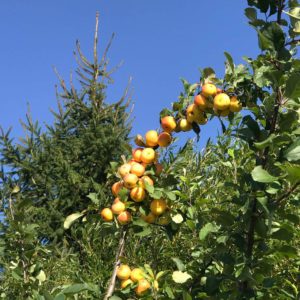
This grafted tree is extremely cold hardy, originating from plant hardiness zone 4a.
Sweet Dog is a 2" applecrab with a complex yet sweet flavor. This tree has fruited heavily after receiving -41 degree temperatures and has proven itself to be a consistently heavy and annual producer. Sweet Dog ripens and drops around the same time period as the Chestnut Crab, dropping fruit mainly during the month of September with a few lasting into October. This grafted tree is a great tree to add to your management plan or combine it with Chestnut Crab adding two cold hardy trees that would give you diversity in your plantings program. This applecrab is also a great addition into a cider mix.
Sweet Dog is showing some great resistance with no Apple Scab, Cedar Apple Rust, Fireblight or Powdery Mildew on this tree in a no spray situation. Mature height is 20'+ and suitable for plant hardiness zones 3-7.
Only available in 2-yr trees.
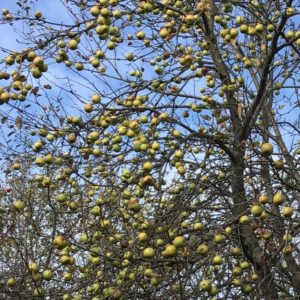
Lockdown Crab™ is an apple crab and is a new cultivar to the Wildlife Management World. Actually, a new apple to the World and is a product of natural selection.
This grafted apple produces heavy crops of 2”+ fruit and drops most of its fruit during November and a few continuing into December. When planted in an area where it blooms from early to mid-May in the north, Lockdown Crab™ will ripen and begin to drop in late October, with the main drop during that important mid-November period. If you are planting below the 40th parallel north, I'm sure you will see this drop time shift and become a few weeks earlier as you go south of this location. Lockdown produces fruit annually and does its job well. I've known this tree for three fruiting seasons, and it has not failed to fruit in those three years.
This sweet apple is heavy bearing and an annual producer. It also shows resistance to C.A.R., Apple Scab, Powdery Mildew, and Fireblight in the Northeast.
Lockdown Crab™ has readily tolerated temperatures of -35 degrees, making it well suited for Northern Climates. With all of its great qualities, Lockdown Crab ™ would be a beneficial component when looking for an enticing food source for wildlife north of the 40th latitude at a time during that critical lockdown period. Lockdown Crab ™ will have a mature height of 20’+. Plant Hardiness Zone 4-7.
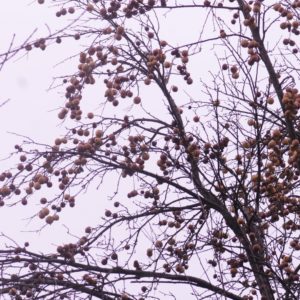
Sweet November Crab™ is a grafted tree which bears a 2" sweet tasting applecrab. The parent tree originates from Northern New York in plant hardiness zone 4 and has seen temperatures as low as -35 degrees. It’s easy to see by its pictures (pictures are from 12/1 and 50% has dropped) that this tree produces a very heavy crop of exceptionally nice sized crabs in Northern New York that drop from early November into January. I believe that once this cultivar is grafted and growing above and below the 40th degree latitude (northern and southern states) we all will see a very nice November/December drop.
As the month of November arrives, most varieties of fruit trees sold commercially will be vacant of fruit. Having varieties such as Sweet November (along with many of our other late dropping cultivars) can create something special as illustrated from just a few pictures shared from among thousands of trail camera photos. While having fruit hitting the ground during late season such as Sweet November you will attract and hold enough does that bucks will definitely be cruising these specific trees looking for receptive does.
Sweet November crab™ is presently growing in the vicinity of 1,000's of other wild apple trees and is showing good resistance to Apple Scab, C.A.R, Powdery Mildew and Fireblight here in the Northeast. The leaves and fruit are very clean in this very big huge old tree with weeping limbs from all the years of carrying a heavy fruit load. Plant Hardiness zones 4 - 7.
Mature height 20'+
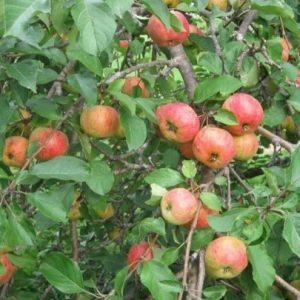
This grafted Chestnut crabapple tree produces a 2’’ apple that is very good for fresh eating, ripens in early September, with a few apples persisting on the tree into October. This tree is a favorite for eating out of hand to many that have planted it. Chestnut crabapple trees have excellent disease resistance to common apple tree diseases. In a no spray situation I have seen great resistance to apple scab, cedar apple rust, powdery mildew and fireblight. This tree is annually productive with heavy crops and is very cold hardy down to Zone 3. Chestnut Crab will reach a mature height of 20'+. Plant Hardiness zones 3 - 8.
$19.95 – $35.95
Select options 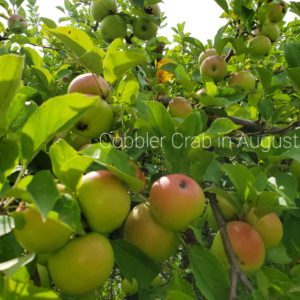
Cobbler Crab™ is a new cultivar. This grafted tree produces an applecrab over 2'' in diameter, annually and heavily. The fruit is crisp, sweet with a touch of tartness which will mellow after time in storage or on the ground. Cobbler Crab™ keeps very well and may belong in your personal orchard as much as it does in your wildlife orchard. The vigor of Cobbler Crab™ is exceptional! The tree grows very fast when grafted onto Dolgo roots.
The fruit begins dropping in early October continuing into December and in some years has been found to still be holding and dropping 20% into January. While being surrounded by 1,000's of other wild apple trees, Cobbler Crab™ has shown resistance to Apple Scab, C.A.R, Fireblight and Powdery Mildew while other apple trees in the area are showing or have shown signs of these diseases here in the northeast. The tree originates from North Western Pennsylvania in hardiness zone 5a but has experienced winter lows of -24 in its life equivalent to those experienced in plant hardiness zone 4. Making this tree suitable for plant hardiness zones 4b - 7.
Maturity height 20'+.
Only available in 2-yr trees.
$19.95 – $35.95
Select options 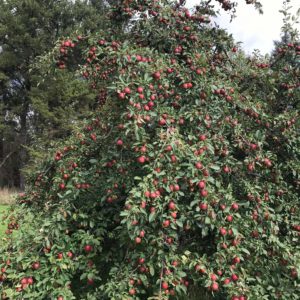
This Grafted apple crab tree is a very heavy spur-producing tree with good disease resistance that shows strong signs of resistance to cedar apple rust, apple scab, powdery mildew, and fireblight in a no-spray situation. The Big Dog Crab will begin dropping in mid-October and will continue into mid-January. The tree is partially self-fertile and produces a large array of blooms in the spring. It is not unusual to see Big Dog put off flowers the 1st year when planting them. Big Dog is very precocious when grafted onto dolgo roots. This tree is very productive, producing abundant crops of 2'' crabapples. This applecrab is late dropping and one very impressive tree, but you can easily see that from the pictures. The vigor in the tree is average, but everything else in this tree is exceptional. Big Dog will reach a mature height of 20'+. Plant Hardiness Zones 3-7. For a video of Big Dog Crab, click here.
$19.95 – $35.95
Select options 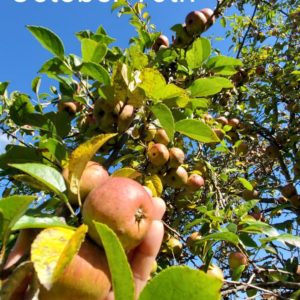
Big Lou™ Crab is easily one of the most unusual and unique trees I have ever encountered. This grafted tree is a heavy annual producer of a 2" apple crab that holds and drops a portion of its fruit during the months of late October, November, December, and January here in Pennsylvania. Big Lou™ Crab drops the most fruit during December and January but will also retain enough fruit that it will continue to drop well into February. For a video from January 17th, 2020, CLICK HERE.
Big Lou™ Crab has a very unusual taste. During the middle of winter, it takes on a nutty yet pear-like flavor. It's easy to see from the pictures and the video of this tree that Big Lou is a Whitetail's favorite treat in very late fall and in through winter. Unlike most other fruit I have ever seen, the fruit holds its integrity, even after being frozen and thawed many times. In the pictures of Big Lou's fruit, you can see that the flesh of this fruit is still firm and intact in the middle of January. If you like to hunt Pennsylvania's late hunting season in January or many other states throughout the Northeast or the Midwest, this tree is necessary. For a video of Big Lou™ on March 1st, 2021, CLICK HERE
The original tree resides in North Western Pennsylvania in plant hardiness zone 5a. Big Lou exhibits no sign of Apple Scab, C.A.R, Powdery Mildew, or Fireblight here in the north. The original tree has seen a sub-zero temperature of -24 that would place its resilience well into plant hardiness zone 4. Plant Hardiness zones 4b - 7. Mature height of 20'+
Only available in 2-yr trees.
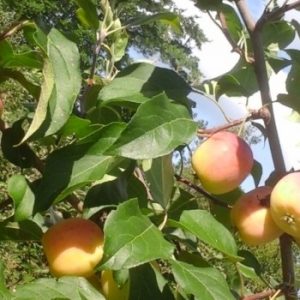
This grafted crabapple is a tree that grows very upright, nicely spread, and exhibits good resistance to common apple tree diseases. Trailman showed excellent resistance to apple scab and cedar apple rust in a no-spray situation. Trailman crabapple produces heavy annual crops of 2’’ apple crabs. It is an excellent-tasting apple that drops free from the tree in mid-August. I would explain the taste as tropical with a good texture. Simply a great apple to start that feeding pattern. Trailman crabapple will reach a mature height of 20'+. Plant Hardiness Zones 3-8.
Only available in 2-yr trees.
$19.95 – $35.95
Select options 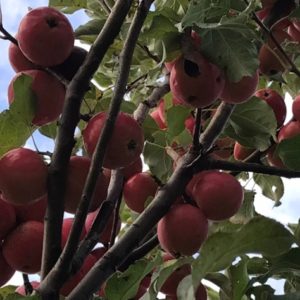
This grafted crabapple is very cold hardy and productive. It produces a very large 2” AppleCrab that tastes very close to a Dolgo crabapple. This crabapple will be dropping free from the tree from October through winter, and will even keep a few apples on into March. The Buckman Crab produced heavily following a winter that had a low of - 41 degrees. This late dropping crabapple as shown good resistance to apple scab, powdery mildew, fireblight and especially cedar apple rust in a no spray situation. Mature height will be 20'+. Plant Hardiness Zones 3-6. For a video of the Buckman Crabapple click here.
$19.95 – $35.95
Select options Only available in 2-yr trees.
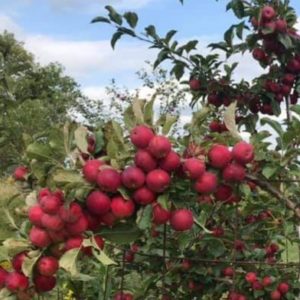
This Grafted Kerr crabapple was introduced in 1952, a cross between the Dolgo and Harlson crab apples. This tree produces heavy crops of apples annually, making it one of the best crabapple trees for deer. Kerr crabapple is around 2" in size with a slightly tart but sweet taste that's good for fresh eating or cider and, more importantly, for me feeding deer—Hardy down to Zone 3, with excellent disease resistance to common apple tree diseases. In a no-spray situation, I see excellent resistance to cedar apple rust, good resistance to apple scab, powdery mildew, and fireblight. This tree will begin dropping in October and continue to drop all fall, with a few persisting on the tree into winter. Kerr is one of the best crabapple tree options for deer sold commercially today. It starts dropping for me in central Pennsylvania in late October and continues into early December. I wouldn't be without this tree. It is clean, hugely productive, and falling at the perfect time, as seen in the pictures. This tree will reach a mature height of 20'+. Plant Hardiness Zones 3-8.
Only available in 2-yr trees.
$19.95 – $35.95
Select options  by
by
Reviews
There are no reviews yet.